“Toxic Masculinuty: California’s Salton Sea and the Environmental Consequences of Manliness”

CITATION:
Traci Brynne Voyles. 2020.  Environmental History 26, no. 1, pp. 127–141.
ON-LINE AVAILABILITY:
ABSTRACT:
In 2018, two military aircraft flew over the Salton Sea, California’s largest inland body of water occupying the desert area of Imperial and Riverside Counties. Midair, the pilots decided to pull a prank: they used their planes to draw Continue reading
Traci Brynne Voyles on the Salton Sea

This spring we will offer a series of posts on the topic of Environmental Justice and Environmental Health. The series is organized in conjunction with a set of talks Continue reading

How do you solve a problem like the Salton Sea?

[We welcome Traci Brynne Voyles to the blog, to kick off a series this spring on Environmental Justice and Environmental Health. The video of her talk in the associated speaker series is available here.]

For the past decade and a half, I’ve been immersed in studying environmental disasters. I’ve focused on the ways they are shaped by various intersecting power structures: Continue reading

The new F*** word: Facts (Part 2)

How to a wear medical mask safely - Do's I ended my post last week with a question—why is it so hard to listen to advice? This is a key question these days, with so many people ignoring Continue reading

The new F*** word: Facts (Part 1)

Logo of the March for Science

Where to start

Science shapes our lives, especially in the Anthropocene. Everybody loves modern science … that is, until we don’t, because scientists say something we don’t like. Continue reading

All the best for 2021!

Morning Glories

Photo by Tina Kambour

It’s a new morning … how glorious!
Here’s to a 2021 filled with renewal and joy.

“The Dialogue between Voltaire and Rousseau on the Lisbon Earthquake: The Emergence of a Social Science View”

CITATION:
Russell R. Dynes. 2000. International Journal of Mass Emergencies and Disasters, Vol. 18, No. 1, pp. 97-115.
ON-LINE AVAILABILITY:
Preliminary version, published by University of Delaware Disaster Research Center
ABSTRACT:
Disasters are usually identified as having occurred at a particular time and place, but they also occur at a particular time in human history and within a specific social and cultural context. Consequently, it is appropriate to call the Lisbon earthquake the first Continue reading

“A Billion Black Anthropocenes or None”

 
CITATION:
K. Yusoff, 2019, University of Minnesota Press.
 
ON-LINE AVAILABILITY:
Page to purchase e-pub.
 
ABSTRACT:
Kathryn Yusoff examines how the grammar of geology is foundational to establishing the extractive economies of subjective life and the earth under colonialism and slavery. She initiates a transdisciplinary conversation between black feminist theory, geography, and the earth sciences, addressing Continue reading

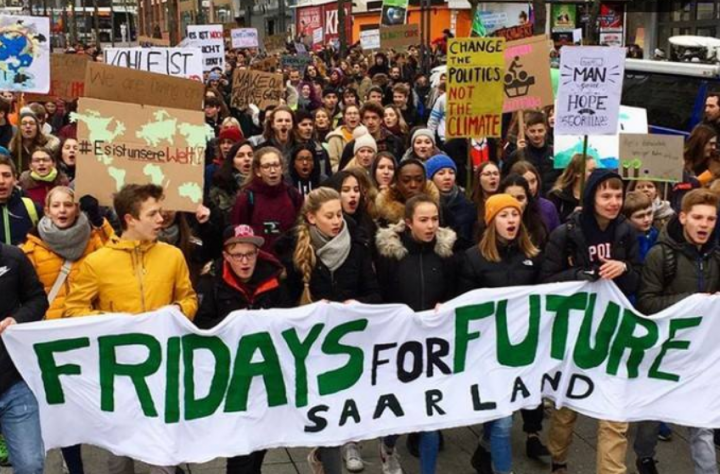
Fridays for Future: A new movement

Fridays for Future

In August 2018 in Stockholm, Sweden, something utterly unremarkable happened. A student, Greta Thunberg, then 15 years old, skipped school for one day a week and Continue reading

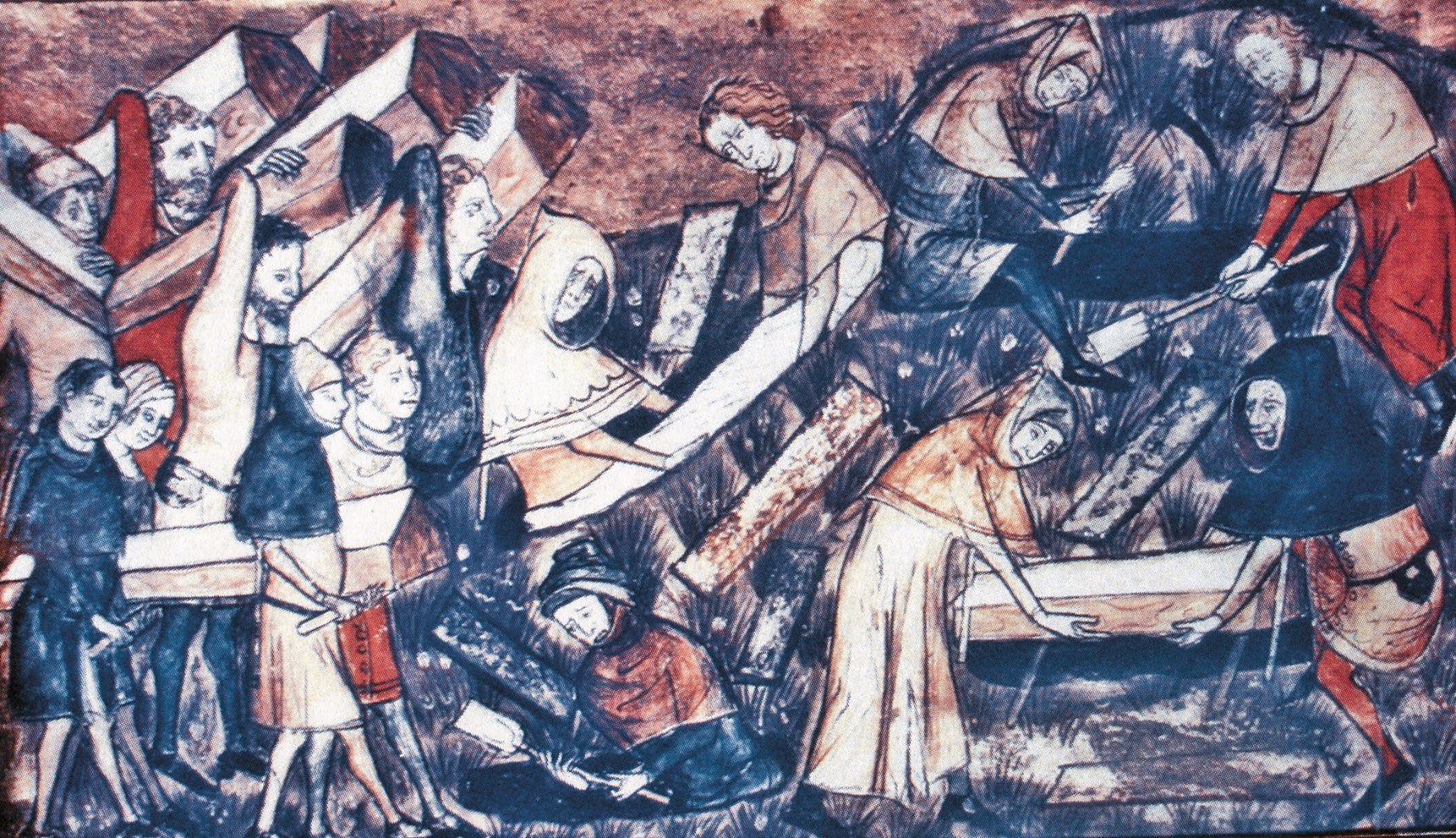
Our Pandemic and Siena’s Plague: Looking Outside Lorenzetti’s Fresco

Burying victims of the Black Death

Burying victims of the Black Death

The COVID-19 spring, and now summer, of 2020 has kept me thinking about something with which I have been preoccupied for about a year now: the fresco series by Ambrogio Lorenzetti known as the Allegory of Good and Bad Government, Continue reading

Efficiency Meets the Pandemic: The Shortage of N95 Masks

N95 face maskOne hallmark of a market-driven economy is efficiency, i.e. manufacturing a product at the lowest cost. However, some problems exist with always being driven to reduce cost. One problem is that Continue reading

The Pandemic and the Kleptocrat: Predators and Parasites of the Anthropocene

In the past eight weeks I’ve read four equally scary magazine articles.  They are (in no specific order): Continue reading

The Coronavirus Looks Like Neoliberalism, Part Two: Images and Counterimages

“There’s no image of it, other than that disco-ball microscopic view of the thing.”

Terry Allen

screen jpg

Screen capture of CNN reporting on coronavirus in the West Wing of the White House, May 11, 2020

In my previous post, I drew on Louis Althusser’s theory of ideology to argue that the “spiky blob” image of the coronavirus produced by designers at the CDC is an ideological image that “interpellates” us by repeatedly triggering in us a flight instinct that leads us to an isolating abyss of fear and thus constitutes us as subjects amenable to the project of neoliberalism.

The broader visual culture of COVID-19 is similarly inclined and has taught us how to fear Continue reading

The Coronavirus Looks Like Neoliberalism, Part One: The “Spiky Blob”

https://www.washingtonpost.com/resizer/qpytHeWTjsMrFlX3zPl6DIbhB9E=/1440x0/smart/d1i4t8bqe7zgj6.cloudfront.net/03-11-2020/t_4fe9b6f1f3aa49ccab17c8475cdd7a8e_name_Screen_Shot_2020_03_10_at_10_59_07_PM.png

Screen capture of Sean Hannity on Fox News, February 27, 2020

A couple months ago, as the reality of the COVID-19 pandemic was setting in, I read a news story in which I learned that unwashed produce could put my life in jeopardy. Why am I being taught to fear vegetables? Louis Althusser may have some answers: Continue reading

Climate Change, the Anthropocene, Health, and Disease

Empty classroom. Photo by Benson Kua (CC BY-SA 2.0)

The Dream Course, Interrupted

With the end of the spring semester, the Climate Change in History Dream Course came to a close. The course was neatly broken in two by COVID-19, which was officially declared a pandemic in mid-March, just as Continue reading

Paul Edwards on Infrastructure, Time, and Risk in Climate Science and Politics

Our final guest lecture for Climate Change in History came from Paul Edwards of Stanford University, a leading expert in the history of climate science who has served on the IPCC. Edwards blends science and technology studies (“STS”) with Continue reading

Indigenizing Environmental Governance


Yvette Wiley

Yvette Wiley showing the author how she uses the Strahler Stream Order in her work as the Director of Environmental Services at Iowa Tribe of Oklahoma. Photo by Loren Waters.

In her April 2020 presentation, Tahltan scholar Dr. Candis Callison, takes a close look at how the Anthropocene – as articulated by scientific collectives such as the Anthropocene Working Group – signifies a logic of severed relations that pines for Continue reading