Following our series on “Cities and Our Future,” I’m pleased to introduce the second of our special programs on the theme of the Urban Anthropocene. Starting today, and running through April, we will have a series of posts that take up the idea of “urban metabolism:” the analogy between cities and organisms that focuses attention on the systems by which cities obtain resources, and generate and dispose of wastes.
Reviving Municipal Housekeeping
This is the third in Dr. Rosenthal’s three-part series on “Cities and Our Future: Governance in the Anthropocene.” Here are links to the first, and second posts. She will present her ideas at a panel discussion on the OU campus on March 6, 2018; here is the poster for the event.

Roots of Municipal Capacity-Building
In the late 19th century, a movement for municipal reform gained prominence across the nation, led by the emergence of Continue reading
Green Cities, Red States
This is the second in Dr. Rosenthal’s three-part series on “Cities and Our Future: Governance in the Anthropocene.” Click for the first post.
Cities have variously been characterized as “limited” (Peterson 1981), “dependent” (Kantor 1995), and “ungovernable” (Ferman 1985.) Urban scholar Paul Peterson in his seminal work, City Limits, concluded that cities are seriously limited by Continue reading
Who Will Lead?
This is the first in Dr. Rosenthal’s three-part series on “Cities and Our Future: Governance in the Anthropocene.”
When President Trump proclaimed that the United States would withdraw from the Paris climate accord, he claimed to represent the “citizens of Pittsburgh not Paris.” Pittsburgh Mayor Bill Peduto was quick to respond, tweeting Continue reading
Cities and Our Future: Governance in the Anthropocene
I’m delighted to introduce the first of two special programs we will run this semester under the rubric of our “Urban Anthropocene” series.
Continue reading
New Year’s Greetings for 2018

Wishing you all the best for the holiday season!
We will be back on January 17, 2018 to continue our exploration of the urban Anthropocene.
“Moving from ‘matters of fact’ to ‘matters of concern’ in order to grow economic food futures in the Anthropocene”
CITATION:
Hill, A. 2015. Agriculture and Human Values, vol. 32: pp. 551-563.
ON-LINE AVAILABILITY:
ABSTRACT:
Agrifood scholars commonly adopt “a matter of fact way of speaking” to talk about the extent of neoliberal rollout in the food sector and the viability of “alternatives” to capitalist food initiatives. Over the past few decades Continue reading
Cities in the Technosphere

Two recent special sections of the journal The Anthropocene Review offer a set of interdisciplinary reflections on the “technosphere.”[1] In this post, I will discuss several of the contributions in order to ask Continue reading
Outsourcing our thermoregulation to the city
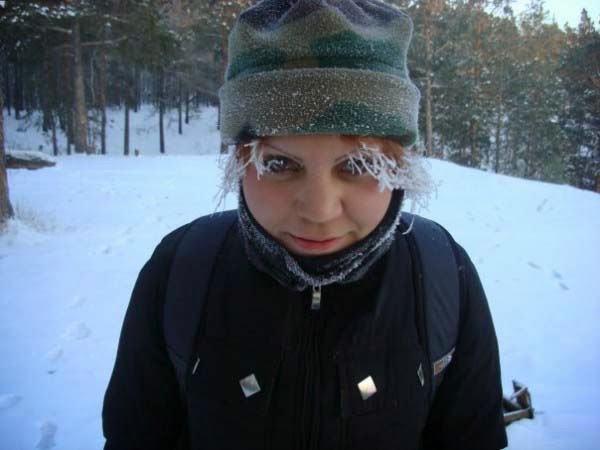
The cold in Yakutsk, Russia. Courtesy of http://www.snowaddiction.org
In the middle of winter in Yakutsk, Russia, the average temperature is -34 °C–so cold that the difference between Celsius and Fahrenheit is negligible. Overnight dips to -42 °C are common. For the 270,000 people who live there, time outside is to be avoided—eyeglasses freeze to your face, eyelashes freeze, your nose hairs freeze. October to April is spent scurrying around from house to house and spending Continue reading
“Cities in the age of the Anthropocene: Climate change agents and the potential for mitigation”
CITATION:
Pincetl, S. 2017. Anthropocene, Vol. 20, pp. 74-82.
ON-LINE AVAILABILITY:
ABSTRACT:
Cities are human creations where many of the emissions causing climate change originate. Every aspect of daily life in cities Continue reading
Pathogens and the Anthropocene: Germs, Genes, Geography, Part 2
[This is the continuation of the post from last week.]
To speak of an “Anthropocene for pathogens” is to imagine the ways that human transformation of the environment has shaped the ecology and evolution of infectious microbes. In other words, it is to imagine Continue reading
Pathogens and the Anthropocene: Germs, Genes, Geography, Part 1

The smallpox virus
We welcome our colleague Kyle Harper to the blog; his bio is on the OU contributors page. His book, The Fate of Rome: Climate, Disease, and the End of an Empire, is now available from Princeton University Press. Continue reading
Early Cities and Other Urbanisms
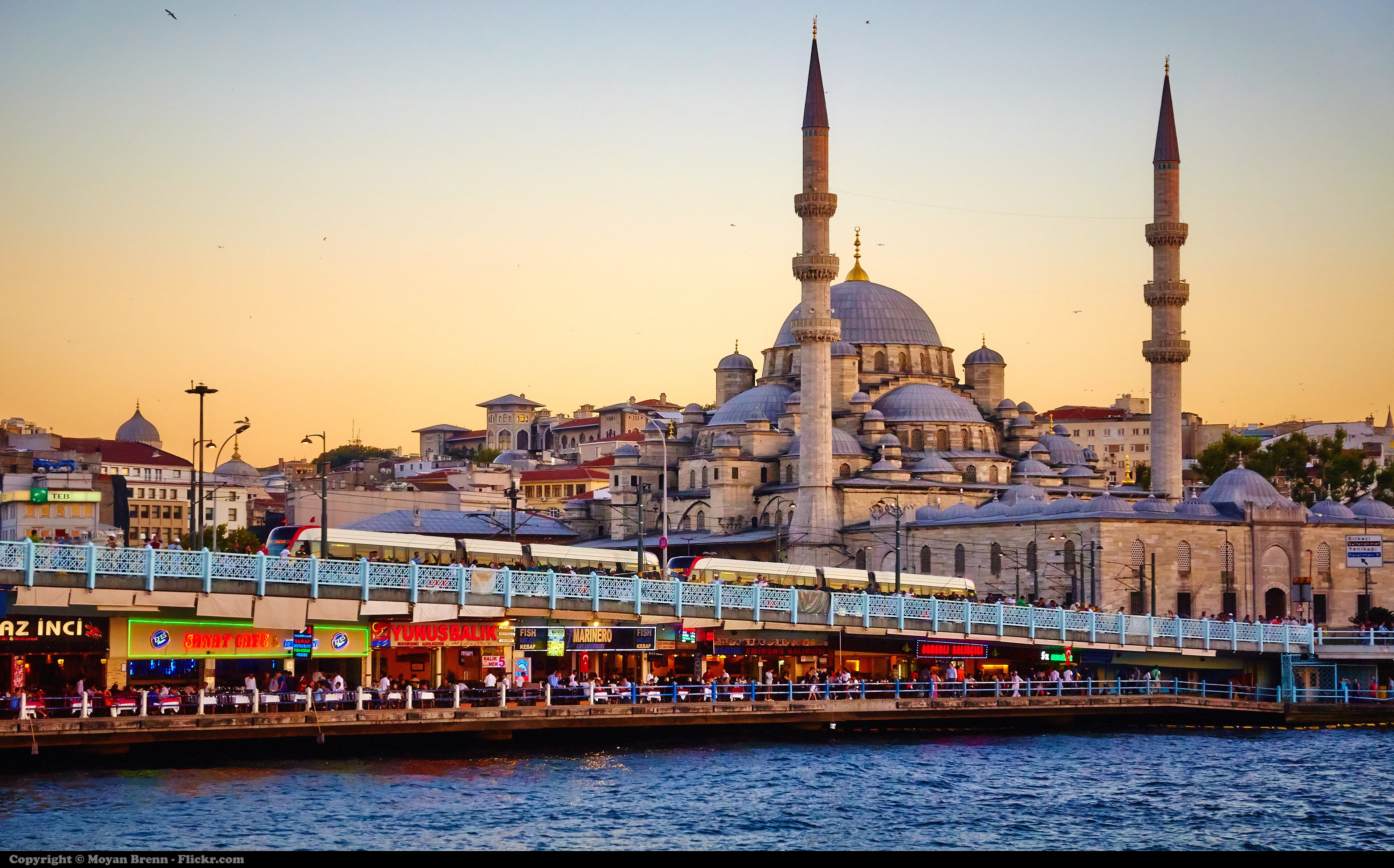
Galata bridge in Istanbul, bridging east and west, old and new. By Moyan Brenn [CC BY 2.0)]
Urban Ecology
As we get started with our series on the urban Anthropocene, I’d like to approach the topic as a biologist, and think of cities as places filled with various kinds of life.
Continue reading
“The Politics”
CITATION:
Aristotle. 1981. Tr. T.A. Sinclair, rev. T.J. Saunders. Harmondsworth: Penguin.
ON-LINE AVAILABILITY:
Internet Classics Archive version (tr. Jowett) at http://classics.mit.edu/Aristotle/politics.html
ABSTRACT:
In The Politics Aristotle addresses the questions that lie at the heart of political science. How should society be ordered to ensure the happiness of the individual? Which forms of government are best and how Continue reading
The Urban Anthropocene
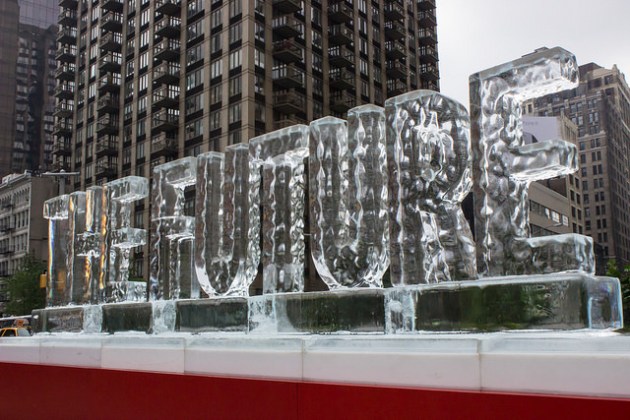
Photo: Nora Ligorano
“Designing Autonomy: Opportunities for New Wildness in the Anthropocene”
CITATION:
Cantrell, B., Martin, L.J., and Ellis, E.C. 2017. Trends in Ecology and Evolution Vol. 32, No. 3, pp. 156–66.
ON-LINE AVAILABILITY:
ABSTRACT:
Maintaining wild places increasingly involves intensive human interventions. Several recent projects use semi-automated mediating technologies to Continue reading
 Inhabiting the Anthropocene
You must be logged in to post a comment.