We are unable to run the post we had scheduled for today, and I think it is important to explain why. Continue reading
We are unable to run the post we had scheduled for today, and I think it is important to explain why. Continue reading

Paris, Pont Alexandre III, January 18, 1910
In 1910 Paris suffered its second largest flood since 1658. Today the city is inundated by a public memory of that event of just over a century ago. Continue reading
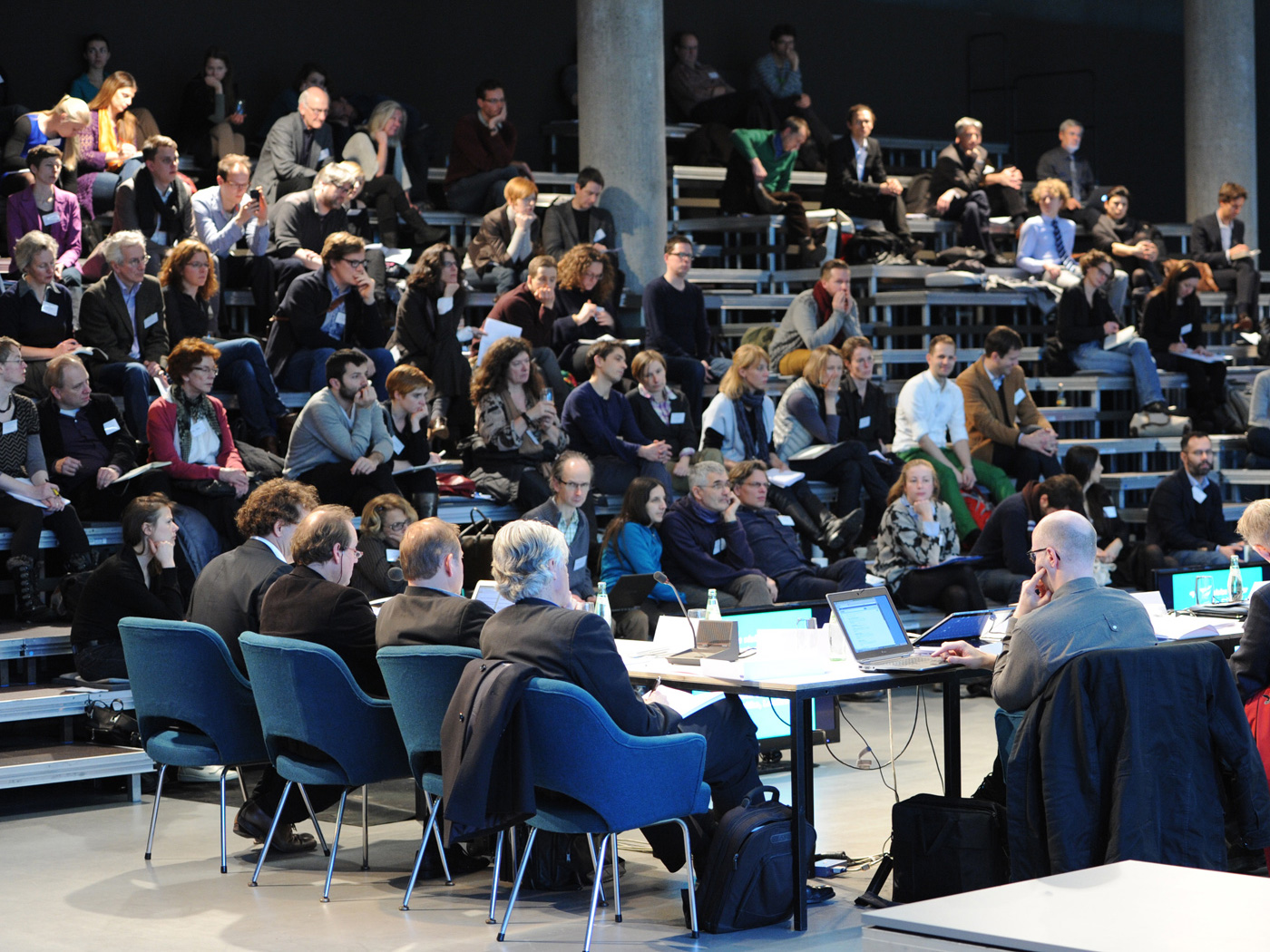
Berlin, 2014. The Anthropocene Working Group (“AWG,” of which I am a member) was convening for the first time to deliberate the proposal to formalize a new geological time unit in Earth’s history. This was personal to me, because Continue reading

Ambergris found in New Zealand. Image from Ambergis NZ
I find examining human history more comforting than considering the ever-encroaching future promised (or threatened?) by talk of the Anthropocene. This preference informs my work as an artist: Continue reading
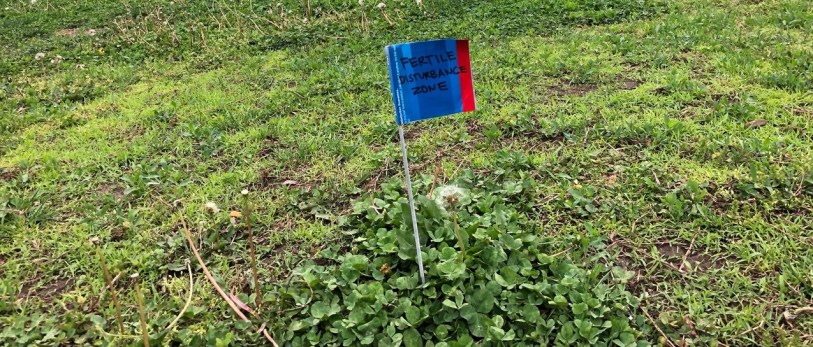
White clover growing in the lawn outside the New York Hall of Science, where the author and Environmental Performance Agency collaborators held the workshop “Plant Talk, Human Talk: An EPA Training for the Beginning of the World” (image by the Environmental Performance Agency)
In my post last week, I used a recent study on the urban evolution of white clover and its coverage in the popular press to start thinking about how traits described as “weedy” relate to Continue reading

Coyote in Golden Gate Park, San Francisco
This post was co-authored by Christian Hunold, Drexel University
and Teresa Lloro-Bidart, Cal Poly Pomona
Coyotes have incorporated themselves into nearly every major city in North America. Coyotes’ ability to thrive in cities testifies not only to the Anthropocene’s blurring of human-wildlife boundaries; it also undermines the idea that Continue reading

I try not to panic about the Anthropocene. Continue reading

Flood warning siren in Venice (from Sounds Like Noise)
Visiting Venice this summer suggested some intellectual bridges between cities (see our previous series on the Urban Anthropocene), and our new theme (Perceiving the Anthropocene). How do cities help us perceive the Anthropocene— Continue reading
This is the first in a series of posts on Perceiving the Anthropocene.

After escaping Polyphemus’s cave, Odysseus, ignoring protests from his men, shouts back in anger at the giant:
Cyclops! If any mortal asks you how
your eye was mutilated and made blind,
say that Odysseus, the city-sacker,
Laertes’ son, who lives in Ithaca,
Destroyed your sight.— Homer, The Odyssey, IX.502-506, Emily Wilson, trans.
Odysseus’s announcement functions like a signature Continue reading
On April 19, 2018, Stephanie Pincetl, of the California Center for Sustainable Communities at UCLA, presented her ideas on coupled urban metabolism at a Continue reading
Earlier this spring, Cindy Simon Rosenthal offered a series of three posts on the topic of “Cities and Our Future: Governance in the Anthropocene.” On March 6, 2018 (rescheduled
Continue reading
THIS POST IS PART OF OUR SERIES ON URBAN METABOLISM.
It continues Part 1’s discussion of two readings: “Democracies with a future: Degrowth and the democratic tradition,” by Marco Deriu, and “De-growth: Do you realise what it means?” by Ted Trainer
Co-authored with Robert Bailey

The Party for Degrowth, rally in Lyon, 2007. © Yann Forget / Wikimedia Commons / CC-BY-SA-3.0.
 Inhabiting the Anthropocene
You must be logged in to post a comment.