
“These layers were formed from thousands of years of A.I. slop.”
Cartoon by Adam Douglas Thompson
Posts that consider how the Anthropocene becomes present to us through sensory experience.
“These layers were formed from thousands of years of A.I. slop.”
Cartoon by Adam Douglas Thompson
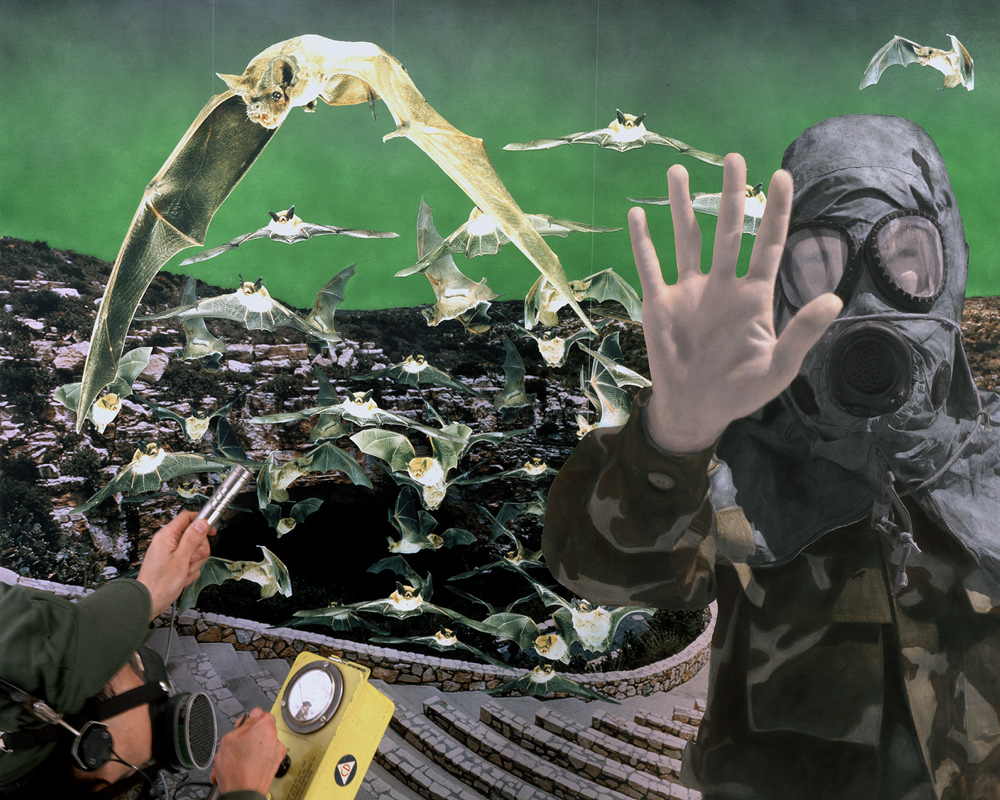
This post was co-authored by
Mariëlle Hoefnagels, University of Oklahoma, Dep’t of Microbiology and Plant Biology
and Amanda Boehm-Garcia, University of Oklahoma, Fred Jones Jr. Museum of Art
Art can highlight environmental issues and be a vehicle for change. While the role of art is as varied as the artists who create it, there are those whose practices intentionally challenge our perspectives, raise awareness, and pose difficult questions to give shape to the world around us. This approach is akin to the impetus that drives the sciences. Many artists, such as American photographer Patrick Nagatani (1945-2017), have melded the methodologies of visual language with detailed scientific study to raise public consciousness about environmental distress.
Continue reading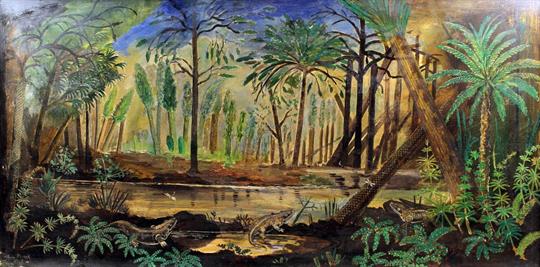
“This sprawling epic is as lively as a natural history museum diorama.” (Stephanie Zacharek, review of “10,000 BC”)
Perceiving means to become conscious of, to realize, to understand, to grasp. Natural history museums strive to enable the public to perceive, commonly in re-creations of past worlds. Who hasn’t gazed over a diorama of the Carboniferous Period, for example, Continue reading
What are we to make of the fact that humans are susceptible to conspiracy theories involving anthropogenic effects on the planet? Continue reading

Paris, Pont Alexandre III, January 18, 1910
In 1910 Paris suffered its second largest flood since 1658. Today the city is inundated by a public memory of that event of just over a century ago. Continue reading
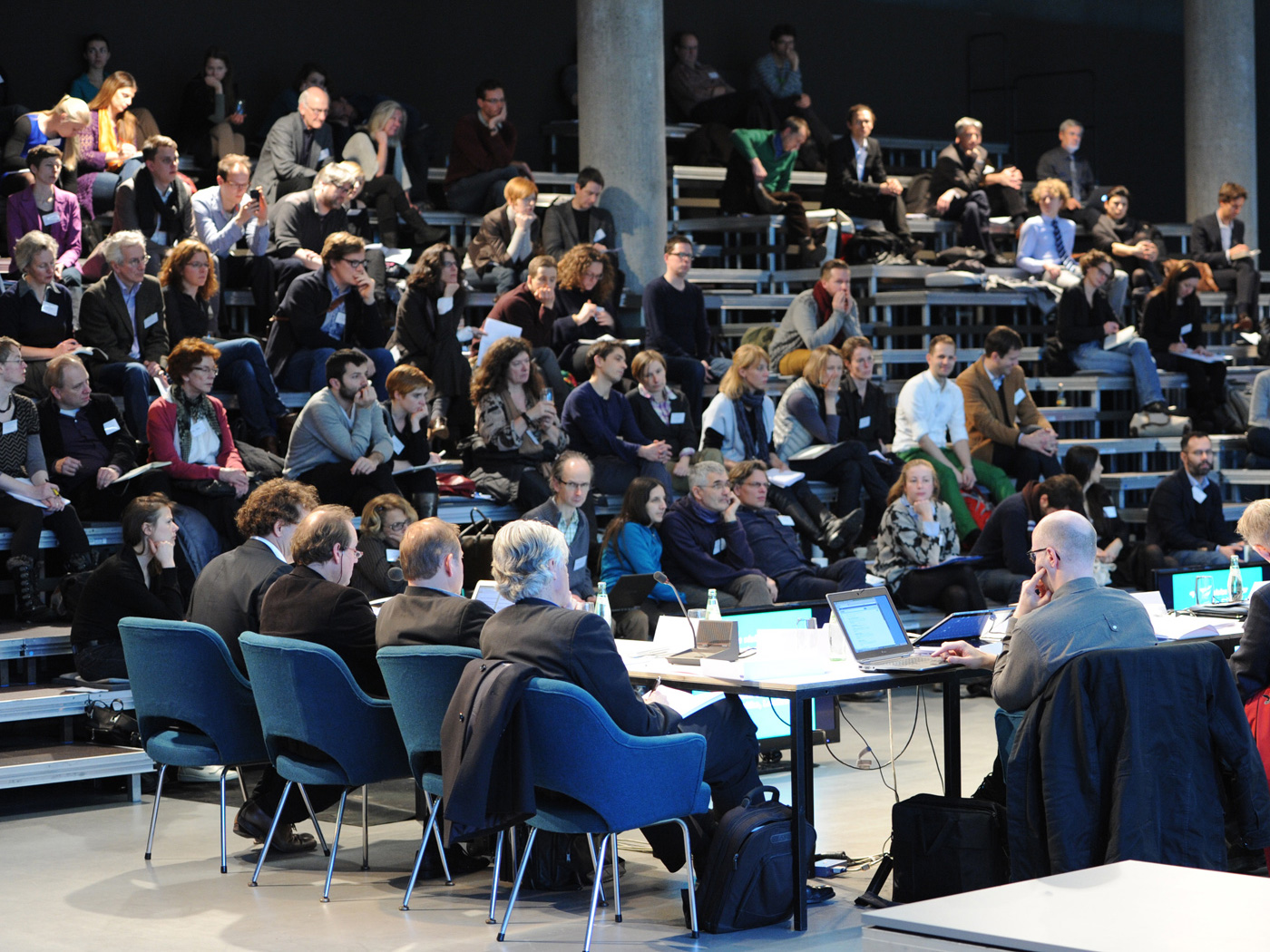
Berlin, 2014. The Anthropocene Working Group (“AWG,” of which I am a member) was convening for the first time to deliberate the proposal to formalize a new geological time unit in Earth’s history. This was personal to me, because Continue reading
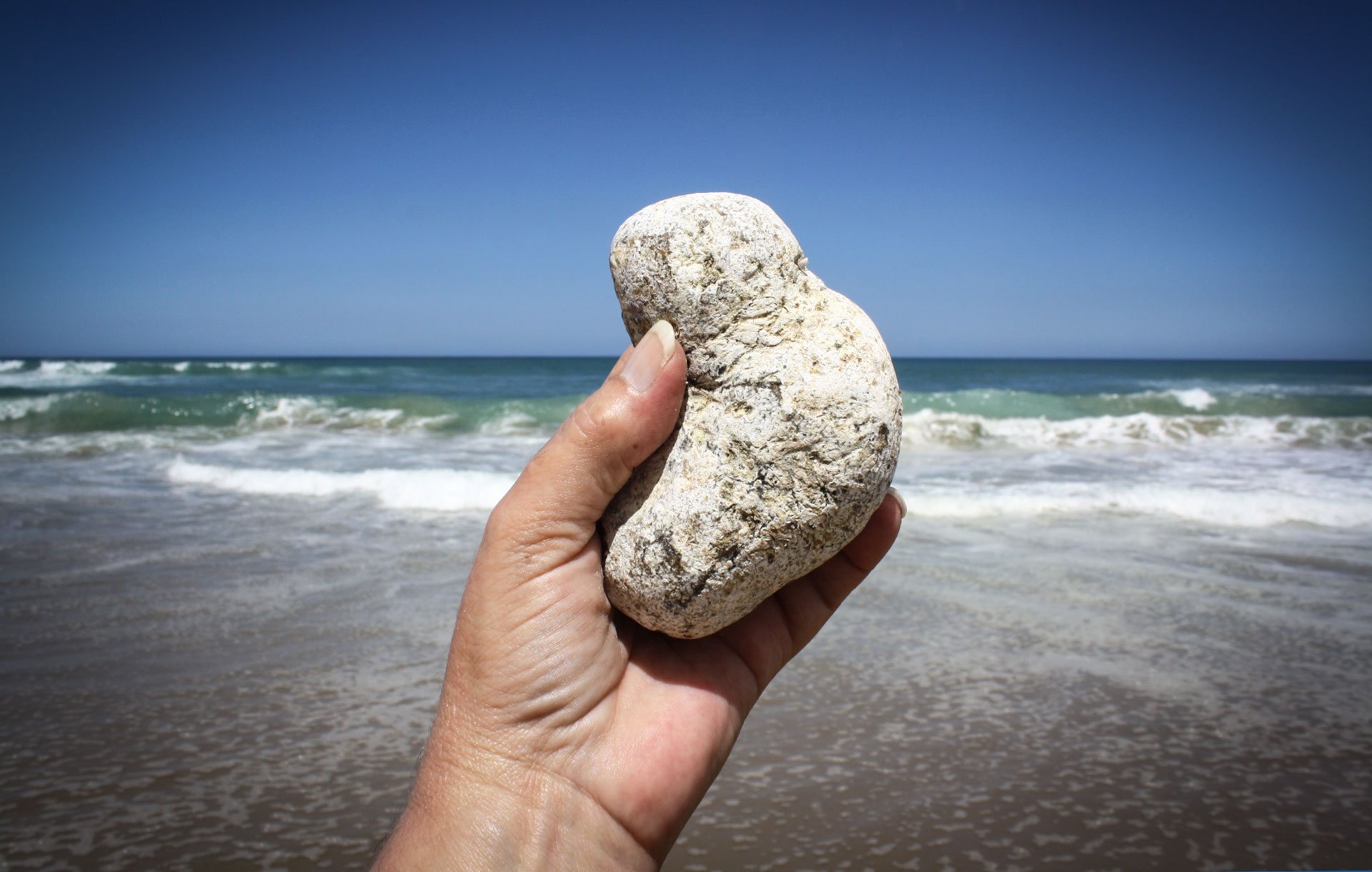
Ambergris found in New Zealand. Image from Ambergis NZ
I find examining human history more comforting than considering the ever-encroaching future promised (or threatened?) by talk of the Anthropocene. This preference informs my work as an artist: Continue reading

I try not to panic about the Anthropocene. Continue reading

Flood warning siren in Venice (from Sounds Like Noise)
Visiting Venice this summer suggested some intellectual bridges between cities (see our previous series on the Urban Anthropocene), and our new theme (Perceiving the Anthropocene). How do cities help us perceive the Anthropocene— Continue reading
This is the first in a series of posts on Perceiving the Anthropocene.

After escaping Polyphemus’s cave, Odysseus, ignoring protests from his men, shouts back in anger at the giant:
Cyclops! If any mortal asks you how
your eye was mutilated and made blind,
say that Odysseus, the city-sacker,
Laertes’ son, who lives in Ithaca,
Destroyed your sight.— Homer, The Odyssey, IX.502-506, Emily Wilson, trans.
Odysseus’s announcement functions like a signature Continue reading
 Inhabiting the Anthropocene
You must be logged in to post a comment.