
I try not to panic about the Anthropocene. Continue reading →
I try not to panic about the Anthropocene. Continue reading
On April 19, 2018, Stephanie Pincetl, of the California Center for Sustainable Communities at UCLA, presented her ideas on coupled urban metabolism at a Continue reading
Earlier this spring, Cindy Simon Rosenthal offered a series of three posts on the topic of “Cities and Our Future: Governance in the Anthropocene.” On March 6, 2018 (rescheduled
Continue reading
Following our series on “Cities and Our Future,” I’m pleased to introduce the second of our special programs on the theme of the Urban Anthropocene. Starting today, and running through April, we will have a series of posts that take up the idea of “urban metabolism:” the analogy between cities and organisms that focuses attention on the systems by which cities obtain resources, and generate and dispose of wastes.
I’m delighted to introduce the first of two special programs we will run this semester under the rubric of our “Urban Anthropocene” series.
Continue reading

Wishing you all the best for the holiday season!
We will be back on January 17, 2018 to continue our exploration of the urban Anthropocene.
In The Politics Aristotle addresses the questions that lie at the heart of political science. How should society be ordered to ensure the happiness of the individual? Which forms of government are best and how Continue reading
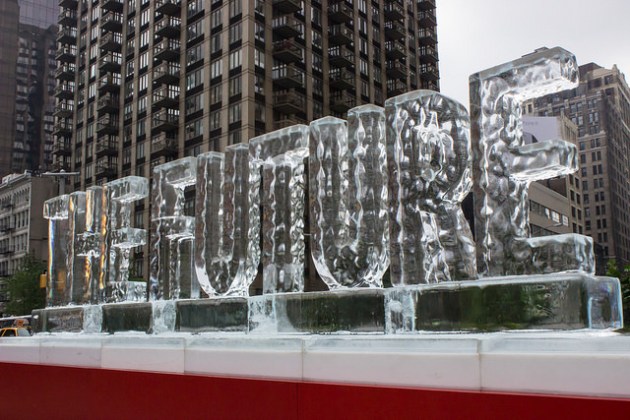
Photo: Nora Ligorano
I’d like to share two recent items from the news that make a sobering pairing.
The first is an opinion piece in the New York Times by psychologist Martin Seligman and Times science writer John Tierny summarizing a new theory about human beings that emphasizes our orientation toward the future. Continue reading

In this season of the solstice, the natural world reminds us that at the darkest moment light can return. But our own nature is such that brighter days in the human sense are not inevitable–they must be strived for and accomplished. Here’s to the joy of imagining, and working toward, a truly habitable future.
I’m delighted to announce that Trends in Ecology and Evolution (TREE) is publishing “The Anthropocene Biosphere: Supporting ‘Open Interdisciplinarity’ through Blogging,” an article about the Anthropocene Biosphere Project that appeared on the blog earlier this year. Continue reading
CRISPR (pronounced “crisper”) is part of a system, noticed in certain bacteria, by which a cell can make changes in strands of DNA. This mechanism appears to be a proto-immune system: it enables a bacterium to recognize Continue reading
This blog is premised on the need for an interdisciplinary approach to the Anthropocene—indeed, to the general question of human beings’ relationship with their environment. And it aspires to embody a certain conception of interdisciplinarity—one which uses conversation as a model for the interaction among people from diverse intellectual backgrounds. Continue reading
The human species has long lived on the edge of starvation. Now we produce enough food so that all 7 billion of us could eat nearly 3,000 calories every day. This is such an astonishing transformation as to Continue reading

Lake Whitney Water Purification Facility, Hamden, CT. Google Earth. Imagery date 9/19/2013. URL: http://goo.gl/maps/ZfQWL
Recently someone asked me to point to something good in the Anthropocene. That can be a hard one. The Anthropocene narrative, to the extent that there is a single story there, is typically Continue reading
 Inhabiting the Anthropocene
You must be logged in to post a comment.