Et in Arcadia ars: Thoughts on Volcanism and Urbanism in Southern Italy, Part Two

[This is the continuation of the post from last week.]

The Plain of Catania, atop which the city of Catania sits, is land reclaimed from the Ionian Sea by Etna’s lava and other subterranean volcanic uplift. Johann Wolfgang Goethe, who traveled across it while writing the letters and notes that became his Italian Journey, refers quite accurately on May 1, 1787 to Continue reading
Et in Arcadia ars: Thoughts on Volcanism and Urbanism in Southern Italy, Part One

In Homer’s Odyssey (9.443), Polyphemus cries out “Nohbdy, Nohbdy’s tricked me, Nohbdy’s ruined me” after Odysseus, his captive and prospective meal, blinds him and eventually flees from his lair. Continue reading

The Tragedy of Coral Bleaching

Bleached coral

Coral bleaching of Lizard Island. Photo credit: Trond Amundsen

If you have ever been lucky enough to see a tropical reef, you will know what I mean: these are places of Continue reading

Prospection and the Anthropocene

I’d like to share two recent items from the news that make a sobering pairing.

The first is an opinion piece in the New York Times by psychologist Martin Seligman and Times science writer John Tierny summarizing a new theory about human beings that emphasizes our orientation toward the future. Continue reading

Weedy Resistance: Multispecies Tactics for Contesting “The Age of Man”

We welcome Ellie Irons, an artist and educator based in Brooklyn, NY, as a guest on the blog . . . click for her own website, or see her bio under the “Who we are” tab.


resistance (Biology): Ability (of an organism, tissue, or cell) to withstand a destructive agent or condition such as a chemical compound, a disease agent, or an environmental stressor. (American Heritage® Medical Dictionary) Continue reading

An Age of Trump in the Anthropocene Epoch?

Stratigraphy is the science of rock strata; in geological terms, this translates to the science of time. But what IS time? Difficult to define, for certain, but most of us can agree that it marks the passage of events. We experience the passage of Continue reading

Loving the Anthr*pocene

My previous post was a provocation on refusal.  How, I asked, might the Anthr*pocene concept naturalize and even magnify the violent, dispossessionary forces it purports to describe?  And how might refusing this concept relate to Continue reading

The Iconoclastic Anthropocene: On How We Choose to Destroy Art

Ivo Bazzechi Cimabue FloodOn November 4, 1966, the Arno overflowed its banks into the streets of Florence. A number of prominent foreign art historians, including Frederick Hartt and John Shearman, arrived soon thereafter to assist their Italian colleagues, working generally under the oversight of the Uffizi’s conservation director Umberto Baldini, in developing a response to a cultural emergency: the Italian Renaissance was underwater. Their collective expertise facilitated the arduous work of restoring what could be salvaged from the flood, which had Continue reading

The Roles for Indigenous Peoples in Anthropocene Dialogues: Some Critical Notes and a Question

We welcome Kyle Powys Whyte, of Michigan State University, as a guest on the blog . . . click for his bio, or go to the “Who we are” tab.


I bet there have probably been more than a hundred events organized for the purpose of fostering dialogue of all kinds on what meanings and futures are presupposed by the “anthropocene.” I have been to some of them. I even just Continue reading

New Year’s Greetings for 2017


baby-2017


In this season of the solstice, the natural world reminds us that at the darkest moment light can return. But our own nature is such that brighter days in the human sense are not inevitable–they must be strived for and accomplished.  Here’s to the joy of imagining, and working toward, a truly habitable future.

Refusing the Anthropocene

Lately I’ve been thinking a lot about refusal and resistance.  What is the difference between them?  And what implications does this distinction have for individual and collective action?  In part, my preoccupation reflects Continue reading

CRISPR as Niche Construction: an Aristotelian View

CRISPR (pronounced “crisper”) is part of a system, noticed in certain bacteria, by which a cell can make changes in strands of DNA. This mechanism appears to be a proto-immune system: it enables a bacterium to recognize Continue reading

Cities as Human Niches: Against the ‘Natural City’

We welcome to the blog Nir Barak, of the Hebrew University of Jerusalem, for the next in our series on Environmental Political Theory.


The city is in some sense our niche; we belong there, and no one can achieve full humanity without it. (Holmes Rolston III[1])

In this post, I want to turn our gaze to cities as the paradigmatic embodiment of niche construction in the Anthropocene. I wish to outline Continue reading

Stewarding the planet? The Anthropocene and nondualist ontologies

We welcome to the blog Luigi Pellizzoni, of the University of Trieste, for the next in our series on Environmental Political Theory.


The ontological claims embroiled in the notion of the Anthropocene have so far attracted less attention than other issues. However, as I will try to show, it is important to engage in a thorough reflection on them—which I hope to kick start with the following contribution. Continue reading

Interdisciplinarity as conversation

This blog is premised on the need for an interdisciplinary approach to the Anthropocene—indeed, to the general question of human beings’ relationship with their environment. And it aspires to embody a certain conception of interdisciplinarity—one which uses conversation as a model for the interaction among people from diverse intellectual backgrounds. Continue reading

The French Lake Dam Fish Ladder and the Temporality of Usefulness

French Lake Dam Fish Ladder (photograph: Larry Smith)

French Lake Dam Fish Ladder (photograph: Larry Smith)

Continue reading

Governance in the Anthropocene: The Role of the Arts

We welcome to the blog Marit Hammond, of Keele University, for the next in our series on Environmental Political Theory.


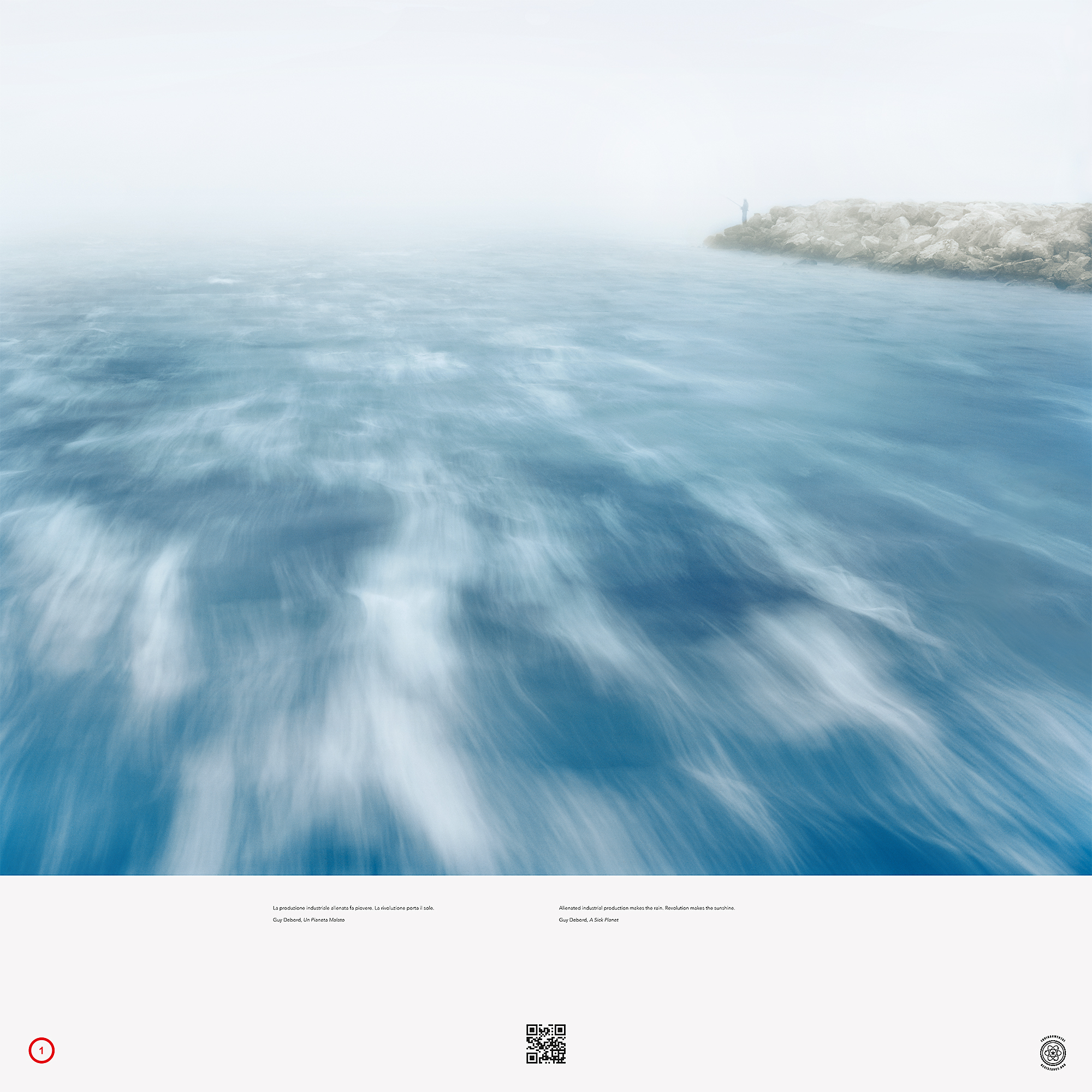
The sea around the Brindisi industrial zone is contaminated with toxins and carcinogens, threatening the sea urchin and mussel populations that are farmed in this area. © Environmental Resistance, http://environmentalresistance.org/art/no-al-carbone/no-al-carbone-view-project/

The sea around the Brindisi industrial zone is contaminated with toxins and carcinogens, threatening the sea urchin and mussel populations that are farmed in this area. © Cerano Power station outflow, from the No Al Carbone series, Environmental Resistance, 2015.

Continue reading